

Shade Sail Wind Rating in Tampa Bay: What Really Determines Safety
Understanding shade sail wind rating in Tampa Bay is essential for anyone considering an outdoor structure in coastal Florida. Unlike inland regions, Tampa Bay experiences a combination of Gulf-driven wind systems, seasonal storms, and hurricane conditions that directly impact structural design requirements.
Because of this, shade systems in the region are not treated as decorative elements—they are engineered structures designed to withstand environmental forces.
At Shady Sails, every system is designed with wind behavior as a primary factor, especially in areas like Clearwater, South Tampa, and St. Petersburg where exposure varies significantly by location.
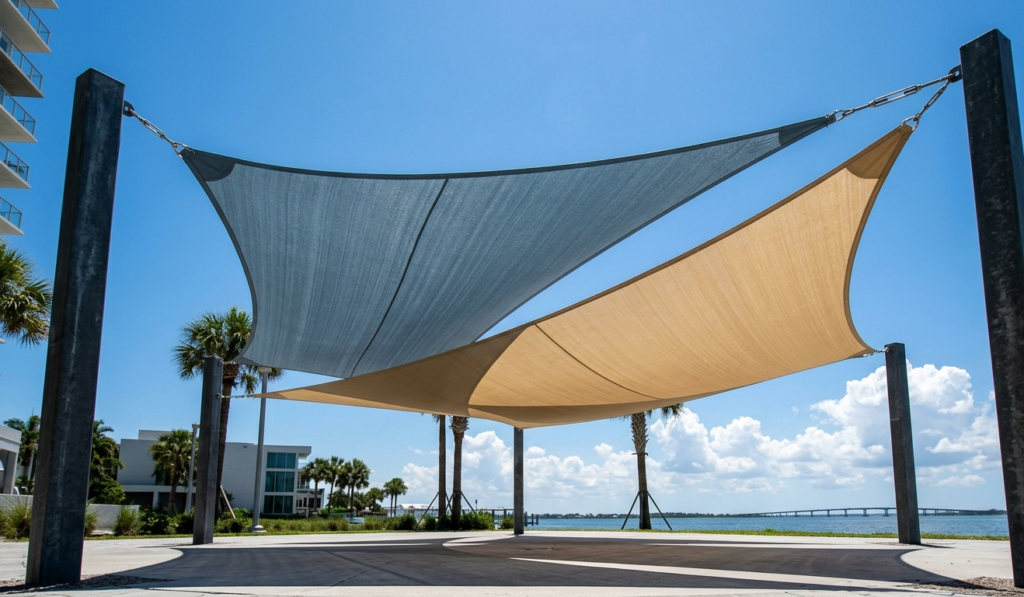
How Shade Sail Wind Rating in Tampa Bay Is Determined
The shade sail wind rating in Tampa Bay is not a single fixed value. Instead, it is determined by multiple structural and environmental factors working together.
These include:
- Structural steel sizing and embedment depth
- Concrete footing design based on soil composition
- Fabric tension levels across anchor points
- Site exposure (open coastal vs sheltered inland areas)
- Local wind patterns influenced by Gulf weather systems
Because Tampa Bay contains both highly exposed coastal zones and more protected inland neighborhoods, wind performance must be engineered on a site-by-site basis rather than using standardized assumptions.
Shade Sail Wind Rating in Tampa Bay During Storm Season
During hurricane season, the shade sail wind rating in Tampa Bay becomes a critical safety consideration.
Many homeowners choose removable shade systems that allow fabric to be detached in advance of major storms. This practice aligns with official hurricane preparedness recommendations outlined by FEMA, which emphasizes reducing outdoor wind loads before severe weather events.
Commercial installations, however, typically rely on permanent engineered systems. These are designed with higher safety margins, using reinforced steel structures and deeper foundation systems to handle sustained wind loads.
Material Behavior and Wind Performance
Different materials respond differently under wind stress, which directly affects system design in Tampa Bay.
Common material behaviors include:
- HDPE fabrics allow airflow, reducing wind pressure buildup
- PVC-coated fabrics provide rigidity but increase wind resistance
- Tensile membrane systems distribute loads across multiple anchor points
The choice of material is not just aesthetic—it directly impacts structural performance under wind load conditions.
Internal Engineering Insight from Real Projects
Wind performance considerations are clearly visible in real-world installations across Florida. You can explore how these systems are applied in practice through Shady Sails’ recent wind-resistant shade sail installations, which highlight how engineering decisions vary depending on exposure level and site conditions across Tampa Bay.
External Engineering Standards
Wind-load design principles for outdoor structures are guided by national building standards. The International Code Council defines structural requirements for wind resistance in hurricane-prone regions under the International Building Code, which establishes baseline safety requirements used throughout Florida.
Why Tampa Bay Is a Unique Wind Environment
Tampa Bay’s geography creates a complex wind environment due to:
- Proximity to the Gulf of Mexico
- Seasonal storm patterns
- Coastal funneling effects in open areas
- Mixed urban and waterfront exposure zones
This variability means two properties only a few miles apart can require completely different engineering approaches.
Understanding shade sail wind rating in Tampa Bay is critical for safe and long-lasting installations. Because wind conditions vary so significantly across the region, proper engineering ensures systems remain stable, durable, and compliant with Florida safety expectations.